Browse
The links below will help you explore our resource section. If you do not see what you are looking for, please type your search terms in the Resource Finder above.
Resources by Type
Resources by Topic
Resources by Event
Latest Resources
Infants show from a very early age that they have their own will. How can we do justice to the whole of Scripture’s message when we describe the human will? Is it only bound to sin? Partly free? Like a robot that God controls? Objecting to Erasmus, Luther said the will was utterly bound to sin; Calvin said that there is no such thing as God “permitting” sin, for whatever he permits, he wills. Does this mean God has willed us to sin? Are we really responsible for sin? Today the discussion continues between those who describe the Reformed view as “compatibilism” and those who object that this philosophical category doesn’t fit what we confess in the Canons of Dort. I intend to present the options in a simple but clear manner, to help us preach and believe the whole doctrine of God with clarity and conviction.
To view the handout that goes with this video please see here.
January 24, 2018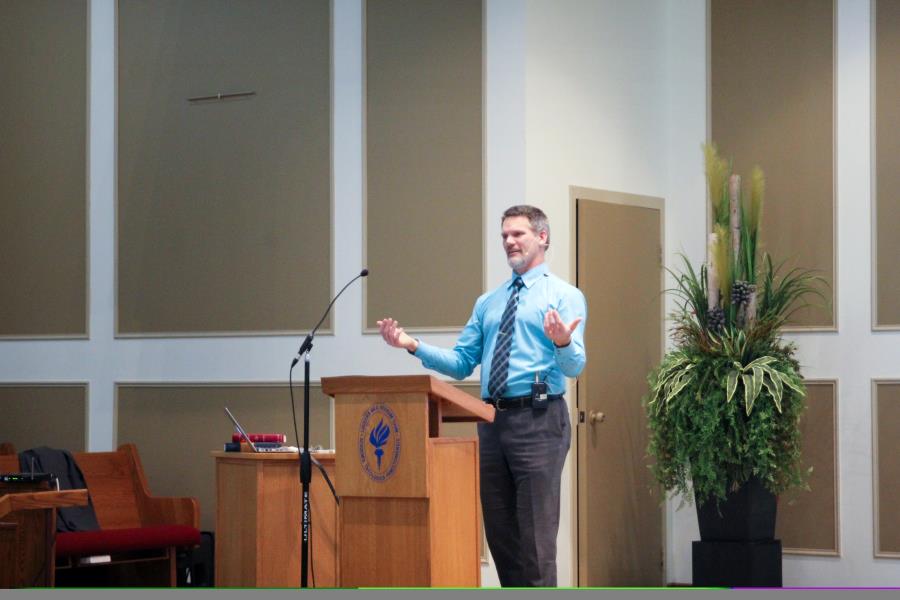
Which news is better: that the battle has been won completely or that most of the fighting still has to be done? Did Jesus only make possible our salvation, or did he actually and fully complete it? In this presentation I hope to present the Son of God as all-glorious in his cross and resurrection, and help us preach the real good news that Jesus has fully redeemed, saved, reconciled, justified, and adopted those for whom he lovingly laid down his life.
To view the handout that goes with this video please see here.
January 24, 2018Though the Synod of Dordt met primarily to address the Arminian controversy, the Heidelberg Catechism came up six times on the synod’s agenda. This presentation explores the six ways the synod dealt with the catechism: (1) The synod discussed ways to enhance regular catechism preaching in Sunday afternoon services. (2) It discussed ways to improve the manner of catechizing, for both youth and adults, in the home, school and church. (3) The Remonstrants (Arminians) presented their observations and suggestions for revision of the Heidelberg Catechism. (4) The Palatine delegation from Heidelberg gave its response to the Remonstrant observations. (5) The catechism was examined by the synod and approved by all delegations, both Dutch and foreign, as consistent with the Word of God. (6) The synod prepared forms of subscription, by which ministers, theologians, and teachers were required to affirm that the Catechism, along with the Belgic Confession and Canons of Dordt, fully agree with the Word of God.
To view the handout that goes with this video please see here.
January 24, 2018