Browse
The links below will help you explore our resource section. If you do not see what you are looking for, please type your search terms in the Resource Finder above.
Resources by Type
Resources by Topic
Resources by Event
Latest Resources

A church’s polity is important. This is where the rubber of faith and confession hit the road of life and practice. In churches with a Dutch Reformed background, the Synod of Dort is not only known for producing the Canons of Dort against Arminianism but also the Church Order of Dort against (Dutch) Erastianism. Dort polity is much appreciated by us Reformed folk as it brings to expression the real gospel of being united to Christ and his body, and being free in Christ and his body. My speech will begin by outlining the development of polity in The Netherlands from the 1560s to 1619. Next I intend to pay attention to some particulars: the role of the offices and congregation, confessional subscription, regulations regarding worship, and the relationship between local churches. This latter point will also be compared to the situation in other Reformed polities, and the presentation will close with a brief overview of the implementation of Dort polity in the centuries after the Synod of Dort.
To view the handout that goes with this video please see here.
January 24, 2018I will give a brief history of the Remonstrants, but will focus in on a couple of key areas in their theology, such as their controversial doctrine of justification by faith. Most assume the Arminians were basically (in)famous for their free will doctrine, but I want to show how one error leads to several. That said, I will also discuss how Arminians are still Christians and how salvation is found by believing in Jesus Christ alone for salvation. I will also highlight the evolution of Arminianism over the centuries, what it can look like today, and the potential pastoral difficulties one has in dealing with modern-day Arminian thought.
January 24, 2018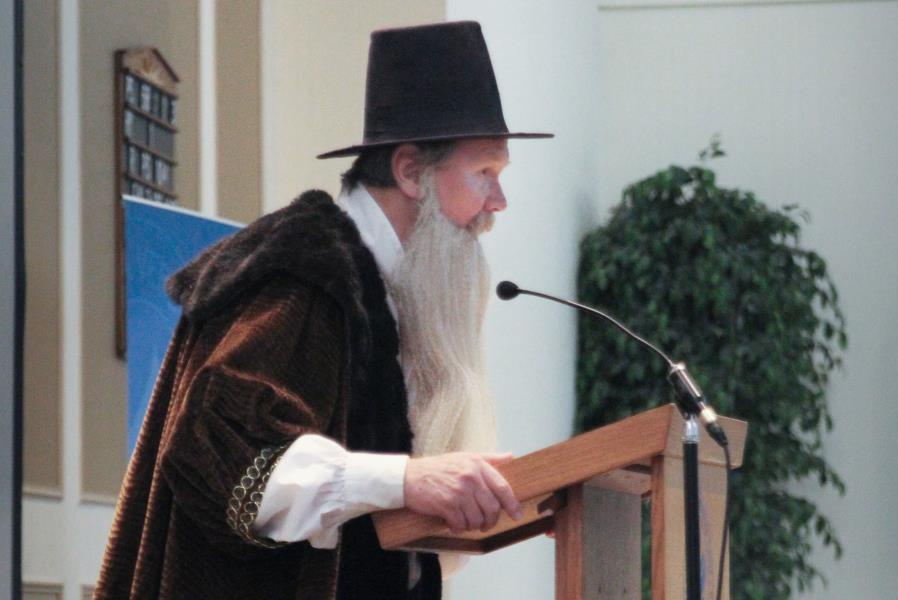
This presentation, with plenty of visuals, will put us on the ground in the old city of Dordrecht in 1618–1619, to depict the circumstances of the Synod of Dordt. We will explore the convening of the synod by the Dutch government, and the facility where the synod was held. The composition of the participants demonstrates that this was a national synod with an international character, with theologians from eight foreign territories. After examining the agenda and procedures of the synod, we will survey the course of the synod’s deliberations that lasted 6 ½ months. These fall into four phases: (1) Pro-Acta sessions, before the arrival of the Remonstrants (Arminians); (2) five weeks of procedural wrangling with the fifteen cited Remonstrants; (3) the synod’s response to the Remonstrant case by drafting and approving the Canons; and (4) the Post-Acta sessions dealing with various Dutch ecclesiastical matters. Finally, we will explore the meticulous process by which the Canons of Dordt were drafted, as the Synod’s response to the Remonstrant objections concerning predestination and related points.
To view the handout that goes with this video please see here.
January 24, 2018